There are no items in your cart
Add More
Add More
| Item Details | Price | ||
|---|---|---|---|
The International English Language Testing System (IELTS) is a globally recognised English proficiency test accepted by universities, employers, governments, and professional bodies across more than 140 countries. Whether you're aiming to study abroad, migrate, or work in an English-speaking environment, the IELTS is your gateway.
For those applying for higher education or professional registration in English-speaking countries.
For migration, work experience, or training programs (especially for countries like the UK, Canada, Australia, and New Zealand).
Both tests assess the four language skills: Listening, Reading, Writing, and Speaking
IELTS is now available in two formats:
Paper-based
Computer-based (CBT)
IELTS Test Format and Question Types:
A. Listening (30 minutes + 10 mins transfer time for paper test)
● Format: 4 sections with 40 questions.
o Section 1: Conversation in everyday social context
o Section 2: Monologue (e.g., local facilities)
o Section 3: Academic or training discussion (usually 2–4 speakers)
o Section 4: Academic lecture
● Question Types:
o Multiple choice
o Matching
o Sentence completion
o Map/diagram/plan labelling
o Summary/table/note completion
Each correct answer gives 1 mark. No negative marking.
B. Reading (60 minutes)
● Academic: 3 long passages from books, journals, magazines.
● General Training: Extracts from advertisements, company handbooks, newspapers, and everyday texts.
● Question Types:
o True/False/Not Given
o Matching headings
o Multiple choice
o Sentence completion
o Diagram label completion
o Short answer questions
40 questions; each carry 1 mark. Timing and skimming/scanning techniques are crucial.
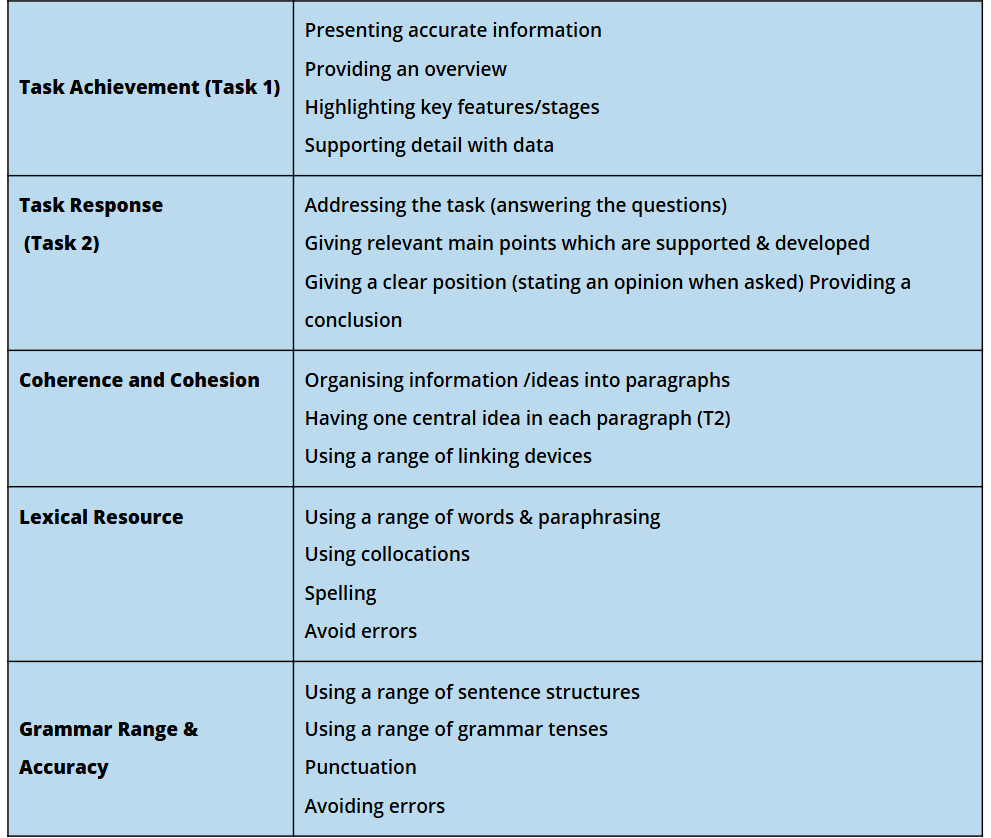
C. Writing (60 minutes)
● Academic:
o Task 1: Describe visual information (graph, chart, table, diagram) – 150 words
o Task 2: Essay responding to an argument or problem – 250 words
● General Training:
o Task 1: Letter writing (formal/semi-formal/informal)
o Task 2: Essay (same as Academic)
● Assessment Criteria:
o Task Achievement (Task 1) / Task Response (Task 2)
o Coherence and Cohesion
o Lexical Resource (vocabulary)
o Grammatical Range and Accuracy
Conducted face-to-face or via video call (same format).
● Parts:
o Part 1: Introduction and general questions (hometown, work, studies)
o Part 2: Cue card (1-minute prep, 2-minute talk)
o Part 3: Follow-up discussion based on Part 2
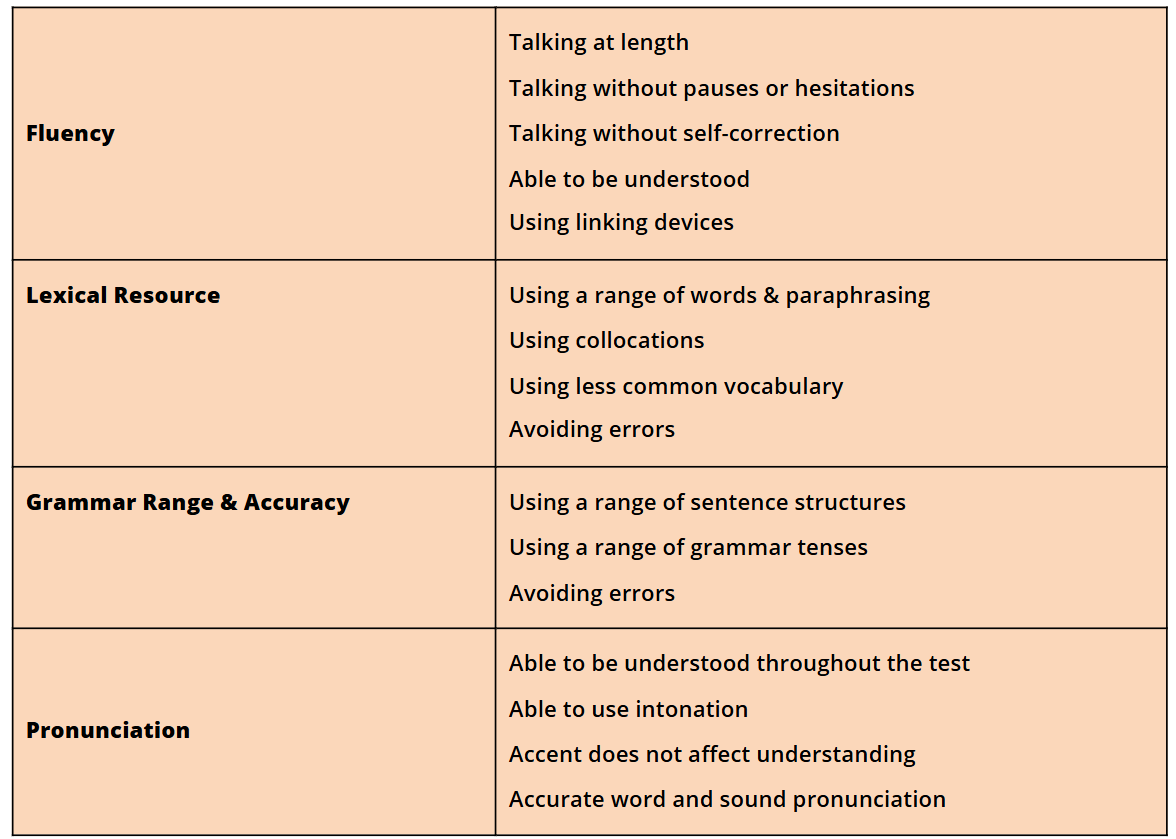
● Assessment Criteria:
o Fluency and Coherence
o Lexical Resource
o Grammatical Range and Accuracy
o Pronunciation
IELTS Band Score Explained :
Each section is scored out of Band 9, and the overall score is the average of the four.
Minimum Targets:
● For Canada PR: 6.0–7.5 depending on stream
● For UK/US universities: 6.5–7.5 for postgraduate courses
● For Australia/NZ migration: Typically 6.0+
● Top universities (e.g., Oxford, Cambridge): 7.5 or higher
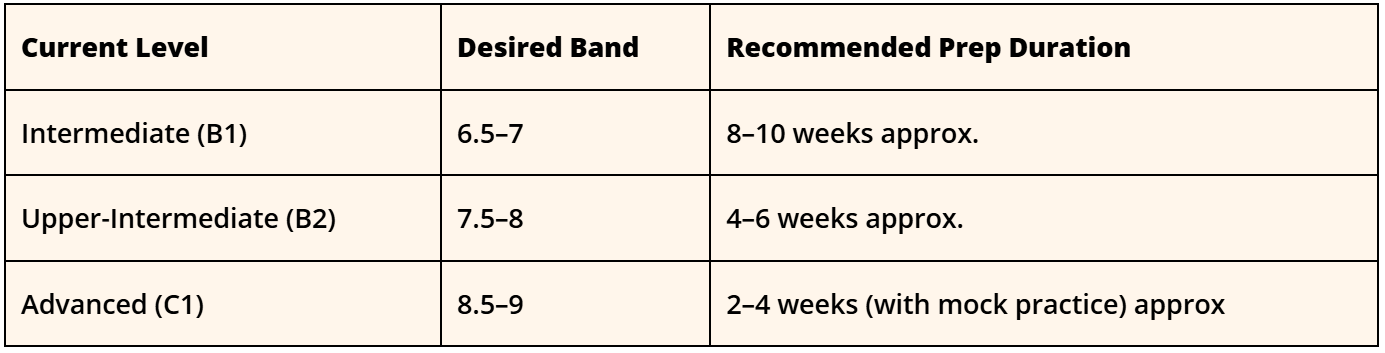
How Long Does It Take to Prepare?
Preparation time varies based on current proficiency:
Consistent practice, timed mock tests (especially in CBT mode), and personalised feedback significantly improve outcomes.
What Should You Aim for in Preparation?
● Know the Format: Don’t just study English; study IELTS.
● Daily Practice: Dedicate 2–3 hours per day.
● Mock Tests: Take at least 5–6 full-length tests in CBT mode.
● Writing & Speaking Feedback: Get expert evaluations to improve.
● Vocabulary Building: Use academic and topic-based word lists.
● Target Band: Always aim 0.5 higher than your required band to stay safe
You must know that -
IELTS is not just about English—it’s about strategy, time management, and familiarity with the format. With Pious Education’s exclusive CBT-mode practice, you get a test-like experience that puts you ahead of the curve. Whether you’re aiming for higher education, migration, or career growth, start your IELTS journey the smart way—with the right tools, mindset, and expert guidance.
IELTS Band Score Calculation – Simplified
Each IELTS component—Listening, Reading, Writing, and Speaking—is graded on a band scale from 1 to 9. You’ll receive an individual score for each skill and an overall band score, which is the average of the four.
The final score is rounded to the nearest whole or half band:
● If the average score ends in .25, it’s rounded up to the next half band (e.g., 6.25 becomes 6.5).
● If it ends in .75, it’s rounded up to the next whole band (e.g., 6.75 becomes 7).
● If it’s below .25 or .75, it’s rounded down (e.g., 6.1 becomes 6 and 6.6 becomes 6.5).
This ensures a fair and balanced assessment of your English proficiency.
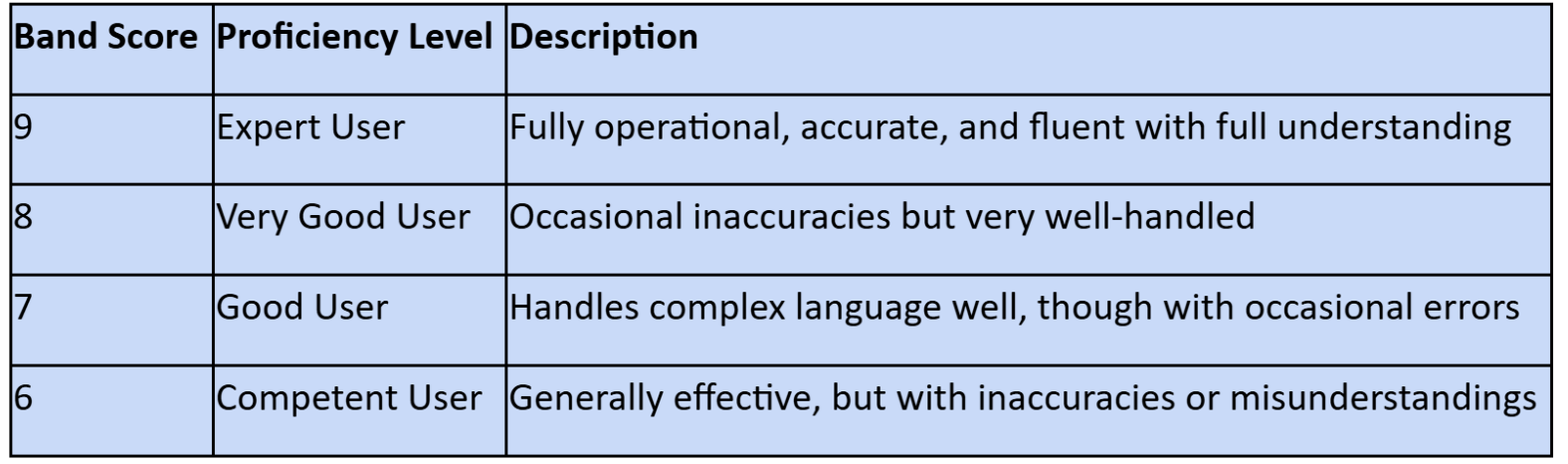
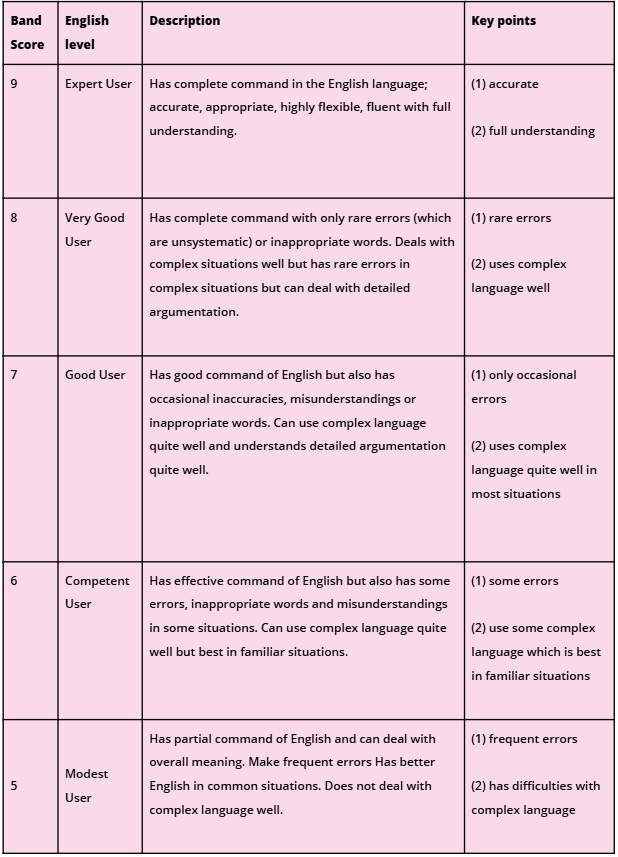
Band score criteria :
The table given below would help you understand each band score descriptively.
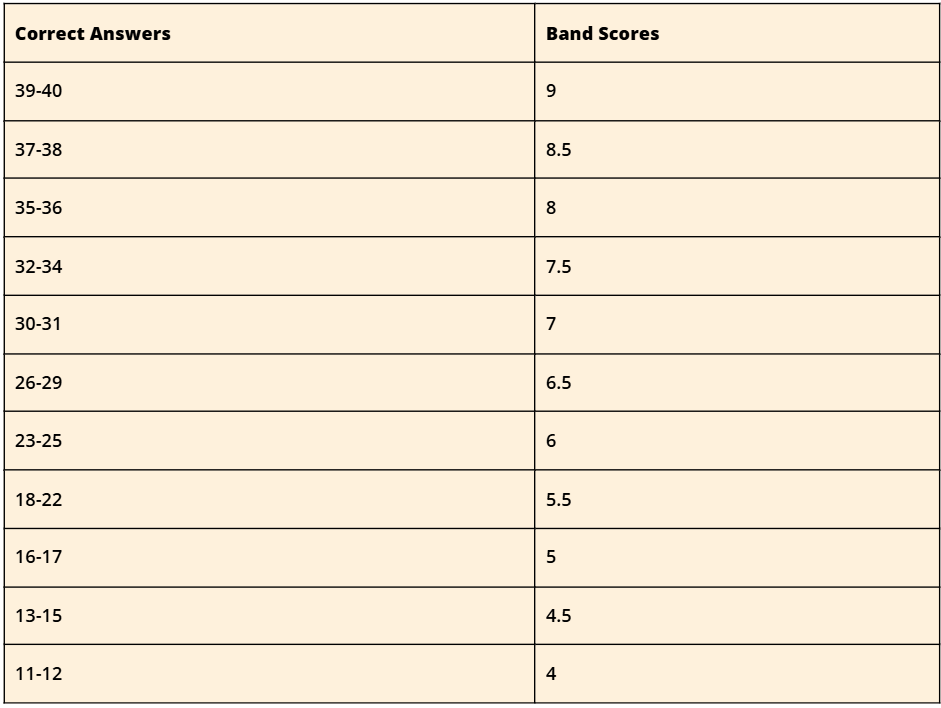
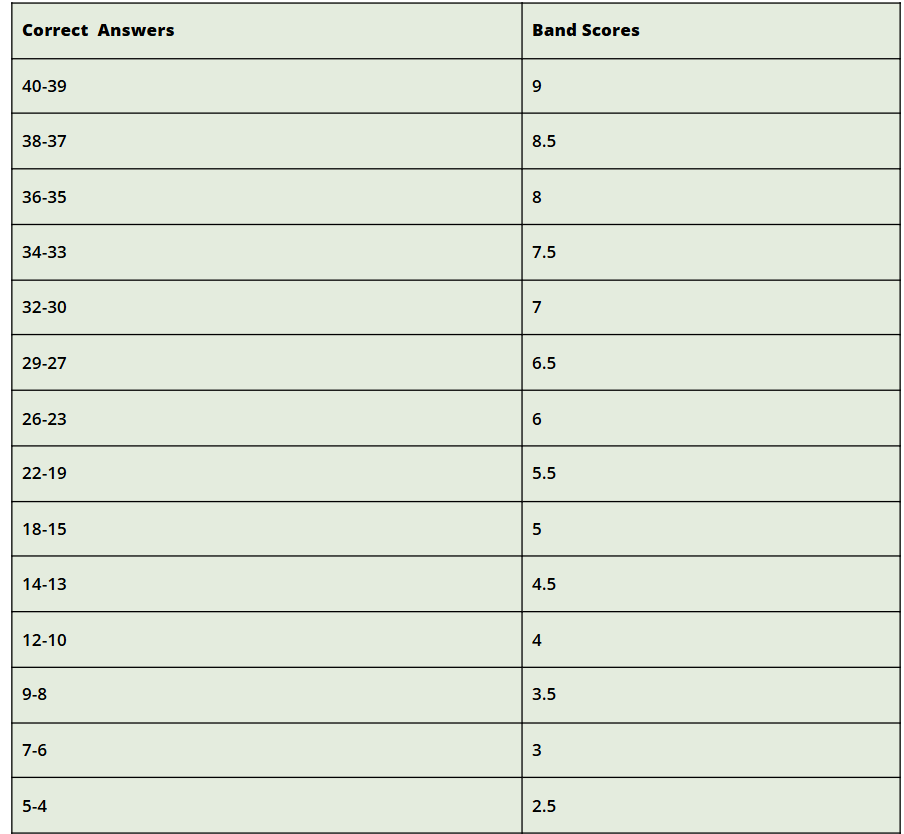
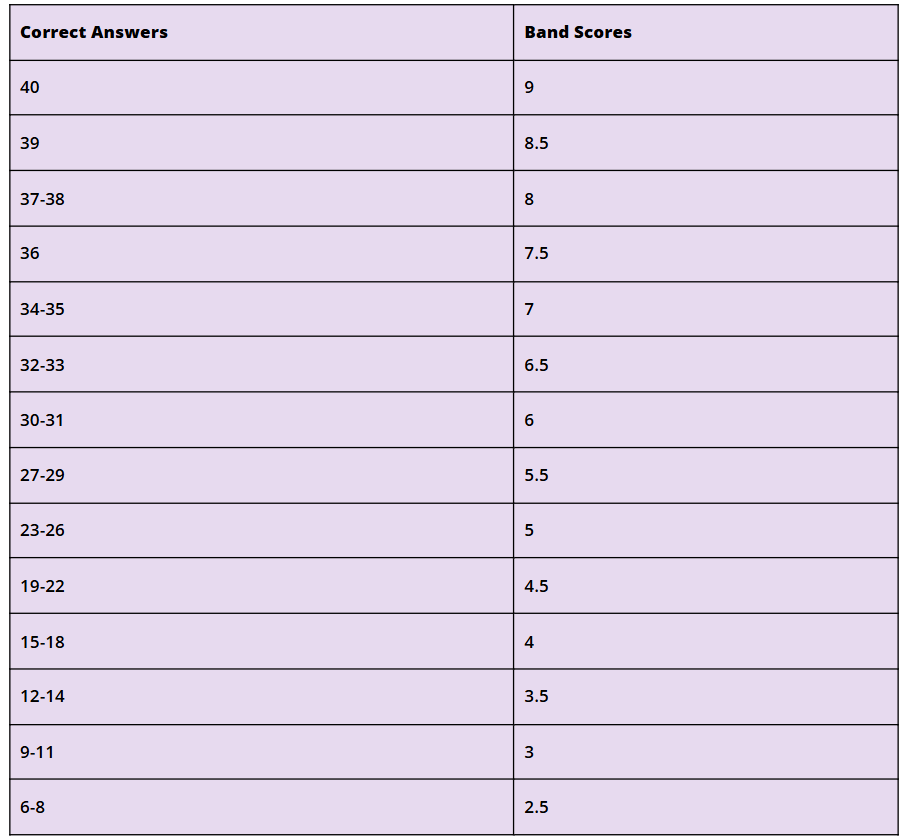
Listening and reading band score :
Your listening and reading scores depend on your overall score. You will not have a native mark for incorrect answers in this test.
IELTS Listening score :
IELTS Reading score:( AC)
IELTS Reading score: GT
IELTS writing assessment criteria :
IELTS speaking assessment criteria :
 Launch your Graphy